
2025: How Scams Target Higher Education, Universities and Students
Australia’s university sector is one of the country’s most valuable industries, contributing more than $25 billion a year to the economy. International students are at the heart of this, with over 600,000 studying in Australia annually. Their tuition fees, cultural contributions, and research work support both universities and the wider community. But this reliance also creates risk. Scammers know that international students face complex enrolment processes, language barriers, and high living costs. The mix of financial pressure and trust in authority makes them a prime target for fraud. Even small percentages of scams can cost millions in direct losses and cause long-term damage to reputations and student wellbeing.
The threat landscape facing students is also shifting rapidly with the rise of artificial intelligence and fraud-as-a-service that allows for cheap industrial scale deployment of attack infrastructure. Where scams once relied on crude emails or phone scripts, fraudsters can now generate highly convincing fake digital properties, deepfake voices posing as officials, and automate scam workflows to optimise attacks against universities, their staff andd students. Below, we look at the most common scams hitting universities and students, backed by real cases in Australia and oversea
Higher Education Institutions are under attack, globally.
We can look to the UK to understand the scale of cyber threats facing universities. The UK government’s 2025 Cyber Security Breaches Survey found that 91% of higher education institutions experienced a cyber attack in the previous 12 months, far higher than primary (9%) or secondary schools (16%). Almost a third (30%) reported breaches on a weekly basis, and 40% of those affected suffered negative outcomes, ranging from financial loss to operational disruption.
The most common attack types were phishing, impersonation, malware, denial-of-service attacks, ransomware, account takeovers, and even unauthorised access by students. This data underscores how universities, with their valuable intellectual property, sensitive student data, and open network environments, are especially attractive targets compared to other parts of the education sector.
While no equivalent survey has been conducted in Australia, the university sector here is experiencing a similar rise in cyber risk. In 2025, Western Sydney University confirmed a breach that exposed the personal data of around 10,000 students and staff, including sensitive information such as passports and financial records. The Australian National University (ANU) was also recently targeted by the FSociety ransomware group in a serious attack. Other institutions have reported significant incidents too: at the University of Western Australia, unauthorised access to password systems forced a mandatory reset for all staff and students, while the University of Notre Dame Australia suffered a ransomware attack that disrupted academic operations.
AI Supported Phishing Attacks
Universities store vast amounts of personal and financial information on students and staff, sensitive medical records, and commercially valuable research particularly in fields like medicine, engineering, and security. Unlike corporations, higher-education networks are designed for openness, with thousands of users, devices, and external collaborators connecting daily. This network of accessibility creates wide attack surfaces that are difficult to lock down without compromising the mission of academic exchange.
Attackers are exploiting this environment with increasingly advanced tactics. Phishing emails are now supplemented by AI-driven spear phishing, which uses generative AI to craft highly personalised messages at scale, often indistinguishable from legitimate communications. New attack vectors like quishing (QR-code phishing) and deepfake-enabled impersonation of faculty or administrators are further eroding traditional defenses. For example, recent red-team exercises in the UK showed that AI-crafted phishing emails achieved click-through rates above 30%, far higher than older, template-based scams. This evolution means universities are not just targets of opportunity but are being deliberately pursued by sophisticated groups seeking data and intellectual property raising the stakes for cybersecurity in higher education.
Universities can protect themselves by tightening access controls, adopting multi-factor authentication (MFA) across all systems, and segmenting networks to limit lateral movement if accounts are compromised. Regular phishing simulations and awareness training for staff and students are essential, especially as AI makes attacks more convincing. Finally, universities should strengthen incident-response playbooks (check out web phishing prevention blog) and collaborate with sector-wide intelligence-sharing groups, ensuring they can quickly identify and block emerging attack techniques.
Australia's fake qualification and financial fraud problem
Between mid‑2023 and the end of December 2024, 79 private colleges were deregistered, resulting in the cancellation of more than 21,000 qualifications, many in sectors like childcare, aged care, and community services, and leaving nearly 18,750 students with worthless diplomas.
Scammers running bogus colleges lure students with slick websites, polished branding, and fake testimonials that mimic legitimate education providers. They often promise seamless matriculation into universities, guaranteed pathways to permanent residency, or lucrative job placements in industries like aged care or childcare. Many target international students with offers of “fast-track diplomas” or “discounted courses,” requiring hefty upfront fees. Behind the façade, course content is minimal or non-existent, qualifications are invalid, and promised opportunities never materialise leaving students out of pocket and, in some cases, at risk of breaching visa conditions.
Government agencies can combat fake colleges by monitoring for malicious domain registrations, fake websites online ads, and social media that pass off as legitimate education providers, while also tracking instant messaging platforms like WhatsApp, Telegram, and WeChat where agents often recruit students out of sight. Using AI-driven detection, undercover accounts, and tip-off data, regulators could disrupt scams early. This kind of proactive online monitoring, combined with swift enforcement, is essential to protect students and safeguard the credibility of Australia’s qualifications system.
AI generated fake University websites are becoming scarily convincing
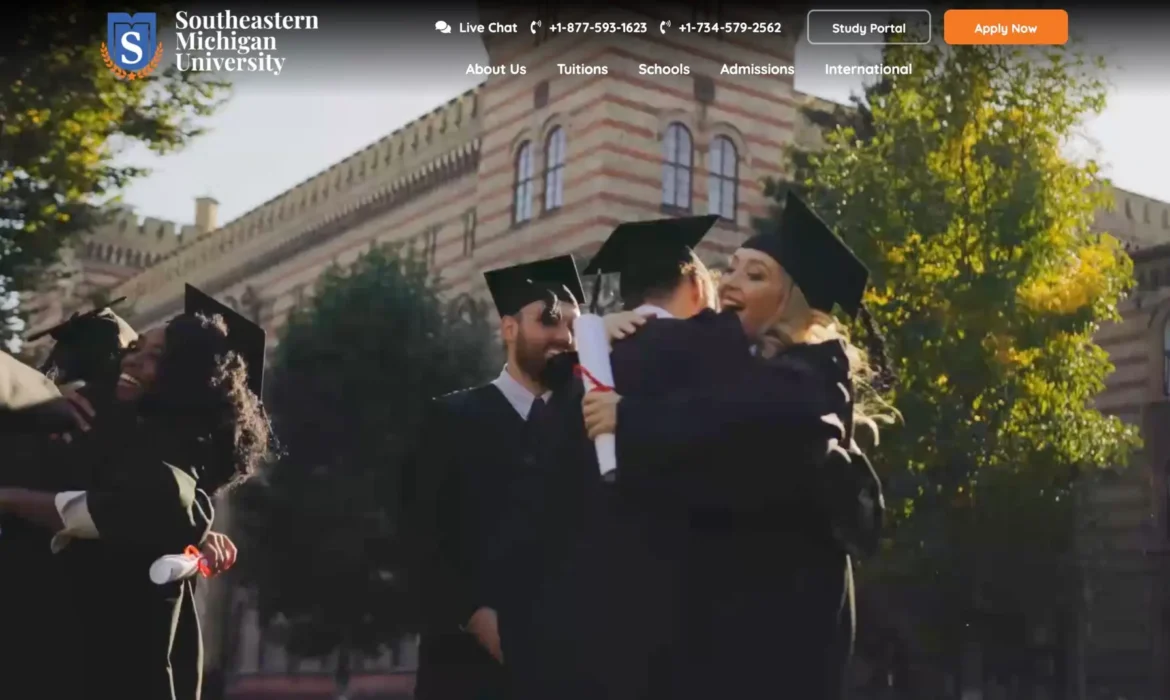
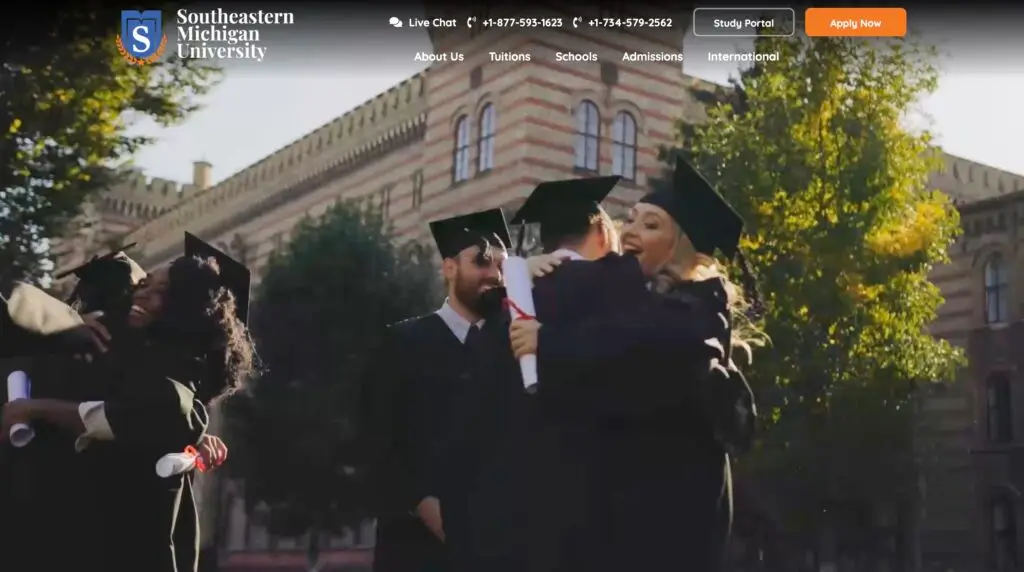
Scammers are increasingly deploying polished, AI-enhanced fake university websites that mimic official institutions, complete with course listings, chatbots, and phony accreditation seals to lure unsuspecting students into applying and paying fees to entities that don’t exist. In a striking 2025 case, Michigan’s Attorney General issued a consumer alert after uncovering “Southeastern Michigan University,” a domain impersonating Eastern Michigan University. This site, alongside nearly 40 similar scam colleges and bogus accreditation sites, used generative AI to create deceptive visuals and text that fooled even cautious applicants
Universities can protect against fake websites by monitoring for look-alike domains and cloned website content, swiftly working with registrars and hosts to take down fraudulent sites, and clearly promoting their official enrolment portals in multiple languages so students know where to apply and pay fees. Regular audits and publication of approved education agents help reduce confusion, while educating prospective students and families through checklists, and fraud-prevention guides builds resilience. Leveraging threat-intelligence and brand protection tools to detect and disrupt impersonation early adds an extra safeguard, ensuring scams are stopped before they reach applicants.
Extortion scams targeting overseas students
Scammers targeting predominantly Mandarin‑speaking international students in Australia have adopted increasingly sophisticated “virtual kidnapping” schemes impersonating Chinese officials and coercing students into staging their own abductions to extort money from families overseas. In a flurry of activity between January and May 2025, the ACCC’s National Anti‑Scam Centre documented nearly 680 “Chinese authority” scam reports, with losses exceeding A$5.1 million, averaging A$138,000 per victim, including at least 21 students.
Universities can protect their students from extortion scams by combining awareness, monitoring, and direct support. They should run regular, multilingual awareness campaigns (particularly in Mandarin, Hindi, and Vietnamese) that explain how scammers impersonate authorities and emphasise that legitimate police, consulates, or embassies will never demand money or secrecy. Student support teams can be trained to recognise early warning signs, such as students suddenly cutting off contact or reporting strange calls and establish safe reporting channels where students feel comfortable seeking help without stigma.
On the technical side, universities can monitor for fake consulate websites, social media impersonations, and other digital infrastructure used to validate these scams, working with law enforcement and takedown providers to disrupt them quickly. Most importantly, universities should ensure clear, rapid access to wellbeing and security services for affected students, so that they are not left isolated when under pressure from fraudsters.
Fraudulent Enrolments & Placements in Higher Education
Fraudulent enrolments are a growing risk for universities, particularly in Australia where international students pay large tuition fees upfront. Scammers may use stolen or fabricated identities to secure fake Confirmations of Enrolment (CoEs) and then divert tuition payments, often $20,000–$40,000 per semester into fraudulent accounts. Overseas, U.S. community colleges saw 1.2 million fake applications and US $11 million in losses through “ghost student” schemes. It is unlikely that scammers would have the success in Australia given the differences in our tuition systems, so they reverse engineer the scam and create fake placements to extract money from families for placements that don’t exist, which we will cover below.
Technology advancements could allow cyber criminals to deploy this scams at an industrial level by automating the creation of realistic fake student identities, generating convincing documents at scale, and even simulating digital interactions that pass basic verification checks.
To reduce exposure, universities should enforce stronger identity verification against Department of Home Affairs and CRICOS records, secure payment processing strictly through official portals, and regularly audit education agents under the ESOS framework. They can also monitor for cloned university websites, spoofed invoices, and impersonation accounts, ensuring fraudulent infrastructure is detected and disrupted early. Multilingual student guidance and collaboration with regulators such as TEQSA add another layer of defence, helping safeguard both students’ finances and the reputation of Australia’s higher education sect
Fake University Recruitment Agents
Unlicensed “education agents” are a persistent risk for international students, using platforms like Facebook, WhatsApp, WeChat and Telegram to advertise guaranteed placements, scholarships, or “fast-track visas.” These operators often charge substantial “placement fees” and provide fabricated paperwork. In 2023, Indian students reported losing thousands of dollars to such scams, only to find on arrival that no valid enrolment awaited them. Similar patterns have been seen in the UK, where fraudulent middlemen exploited franchised colleges to siphon student loan funds, showing how easily education systems can be manipulated when oversight is weak.
Institutions should maintain and publicise clear lists of approved education agents, so students and families can verify legitimacy. They should also monitor for online impersonation of their brands particularly on social media and community forumsm where many scams originate, and act swiftly to take down fraudulent activity. Providing multilingual guidance that explains how to identify genuine agents and official payment channels can help protect families abroad, while demonstrating the university’s commitment to safeguarding its international student community.
Prospective students looking to study in Australia are particularly at risk. For more information see our focussed blog on fake university recruitment agents.

In summary, Australia’s higher education sector faces increasingly complex and multi-faceted scams, ranging from AI-generated fake university websites and fraudulent enrollment schemes to sophisticated extortion campaigns targeting international students.
Fraudsters target international students in particular given the financial pressures, language barriers, and trust in institutional authority. They leverage emerging tools like deepfakes, generative AI and FaaS to operate at industrial scale. To counter these threats, universities must adopt a proactive, layered defense: combining AI-powered monitoring of and fake digital assets; enforce stronger identity verification and payment controls; conduct multilingual awareness campaigns; collaborate with enforcement bodies and their brand protection partner for early takedowns; and reinforce wellbeing support systems for vulnerable students. Only through a coordinated and resilient effort can institutions uphold trust, protect student welfare, and safeguard the integrity of Australia’s globally vital higher education system.
About brandsec
brandsec is a team of highly experienced domain name management and online brand protection experts. We provide corporate domain name management and brand enforcement services, helping brands eliminate phishing platforms across the internet. Supporting some of the largest brands in the region, we offer innovative solutions to combat threats across multiple industries.

Edward Seaford
Product & Enforcement Director
Ed brings over two decades of experience in domain management, brand protection, and phishing defence. At Brandsec and Unphish, he drives the technology and partnerships while leading with a people-first approach.